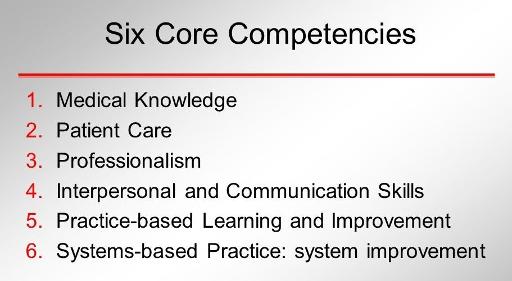
The Wonca Tree.
THE EUROPEAN DEFINITIONS 2011 THE DISCIPLINE AND SPECIALTY OF GENERAL PRACTICE / FAMILY MEDICINE
General practice / family medicine is an academic and scientific discipline, with its own educational content, research, evidence base and clinical activity, and a clinical specialty orientated to primary care.
The characteristics of the discipline of general practice/family medicine are that it
- is normally the point of first medical contact within the health care system, providing open and unlimited access to its users, dealing with all health problems regardless of the age, sex, or any other characteristic of the person concerned.
- b) makes efficient use of health care resources through co-ordinating care, working with other professionals in the primary care setting, and by managing the interface with other specialities taking an advocacy role for the patient when needed.
- c) develops a person-centred approach, orientated to the individual, his/her family, and their community.
- d) promotes patient empowerment
- e) has a unique consultation process, which establishes a relationship over time, through effective communication between doctor and patient.
- f) is responsible for the provision of longitudinal continuity of care as determined by the needs of the patient.
- g) has a specific decision making process determined by the prevalence and incidence of illness in the community.
- h) manages simultaneously both acute and chronic health problems of individual patients.
- i) manages illness which presents in an undifferentiated way at an early stage in its development, which may require urgent intervention.
- j) promotes health and well being both by appropriate and effective intervention.
- k) has a specific responsibility for the health of the community.
- l) deals with health problems in their physical, psychological, social, cultural and existential dimensions.
-------------------------------------------------------------------------------------
The Specialty of General Practice / Family Medicine
- General practitioners/family doctors are specialist physicians trained in the principles of the discipline.
- They are personal doctors, primarily responsible for the provision of comprehensive and continuing care to every individual seeking medical care irrespective of age, sex and illness.
- They care for individuals in the context of their family, their community, and their culture,
- always respecting the autonomy of their patients.
- They recognise they will also have a professional responsibility to their community.
- In negotiating management plans with their patients they integrate physical, psychological, social, cultural and existential factors, utilising the knowledge and trust engendered by repeated contacts. General practitioners/family physicians exercise their professional role by promoting health, preventing disease and providing cure, care, or palliation and promoting patient empowerment and self-management. This is done either directly or through the services of others according to health needs and the resources available within the community they serve, assisting patients where necessary in accessing these services.
- They must take the responsibility for developing and maintaining their skills, personal balance and values as a basis for effective and safe patient care.
- Like other medical professionals, they must take responsibility for continuously monitoring, maintaining and if necessary improving clinical aspects, services and organisation, patient safety and patient satisfaction of the care they provide.
------------------------------------------------------------------------
The Core Competencies of the General Practitioner / Family Doctor
A definition of the discipline of general practice/family medicine and of the specialist family doctor must lead directly the core competencies of the general practitioner/family doctor.
Core means essential to the discipline, irrespective of the health care system in which they are applied.
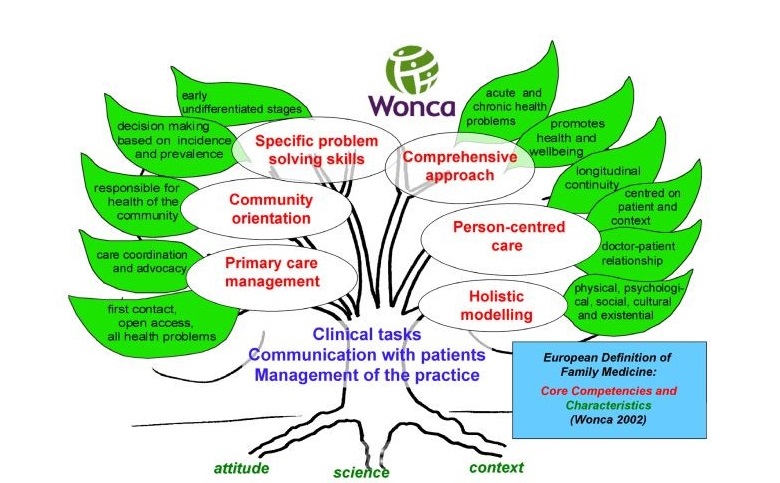
The twelve central characteristics that define the discipline relate to twelve abilities that every specialist family doctor should master. They can be clustered into six core competencies (with reference to the characteristics):
- Primary care management (a,b)
- Person-centred care (c,d,e,f)
- Specific problem solving skills (g,h)
- Comprehensive approach (i,j)
- Community orientation (k)
- Holistic modelling (l)
Particularly in reference to the competencies 1. and 3. quality improvement must be considered included as a fundamental ability.
As a person-centred scientific discipline, three additional features should be considered as essential in the application of the core competences:
- Contextual: Understanding the context of doctors themselves and the environment in which they work, including their working conditions, community, culture, financial and regulatory frameworks.
- Attitudinal: based on the doctor’s professional capabilities , values and ethics
- Scientific: adopting a critical and research based approach to practice and maintaining this through continuing learning and quality informtion.